posts in
Health
The Pop of Red and Issues of the Heart
May 25, 2018
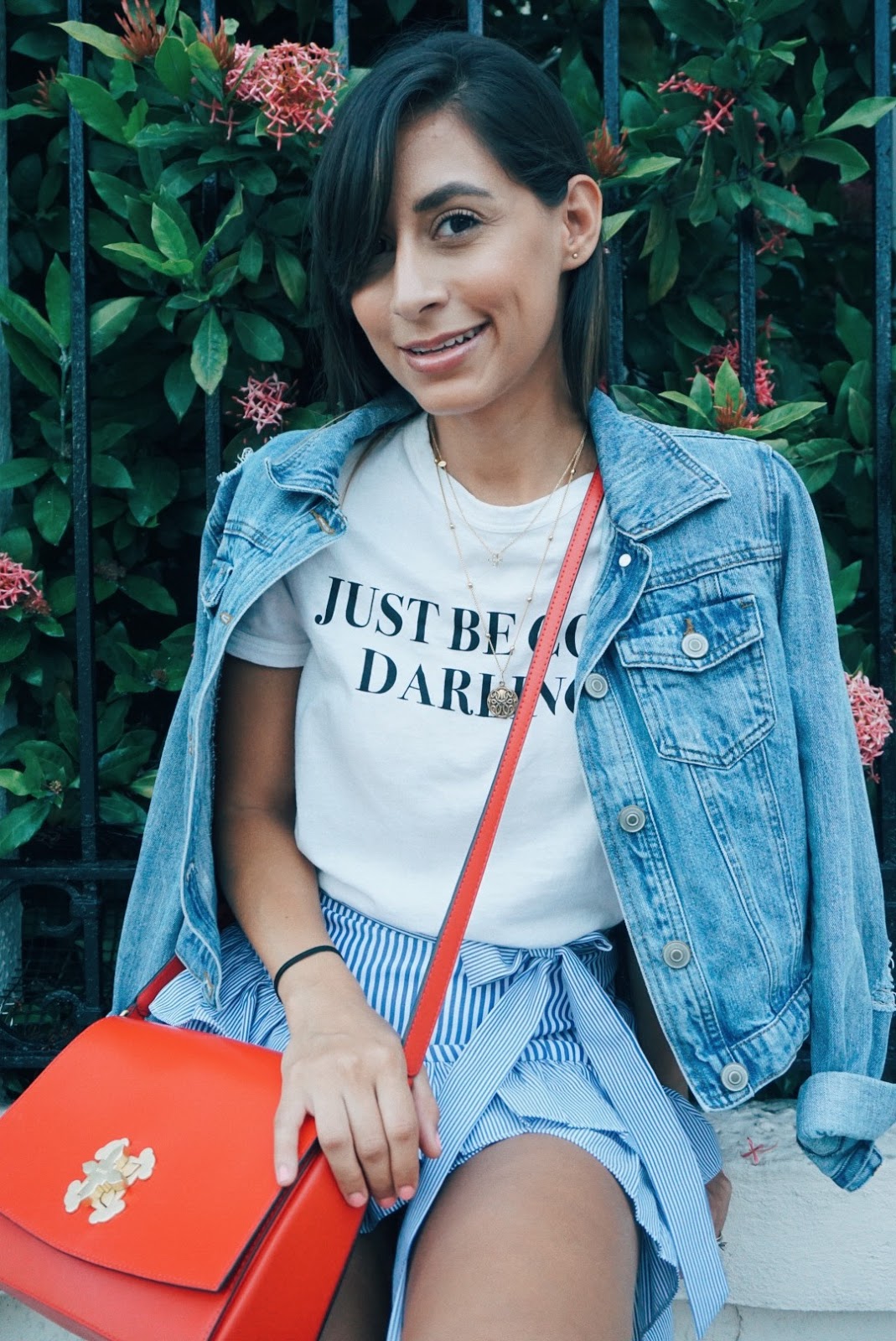
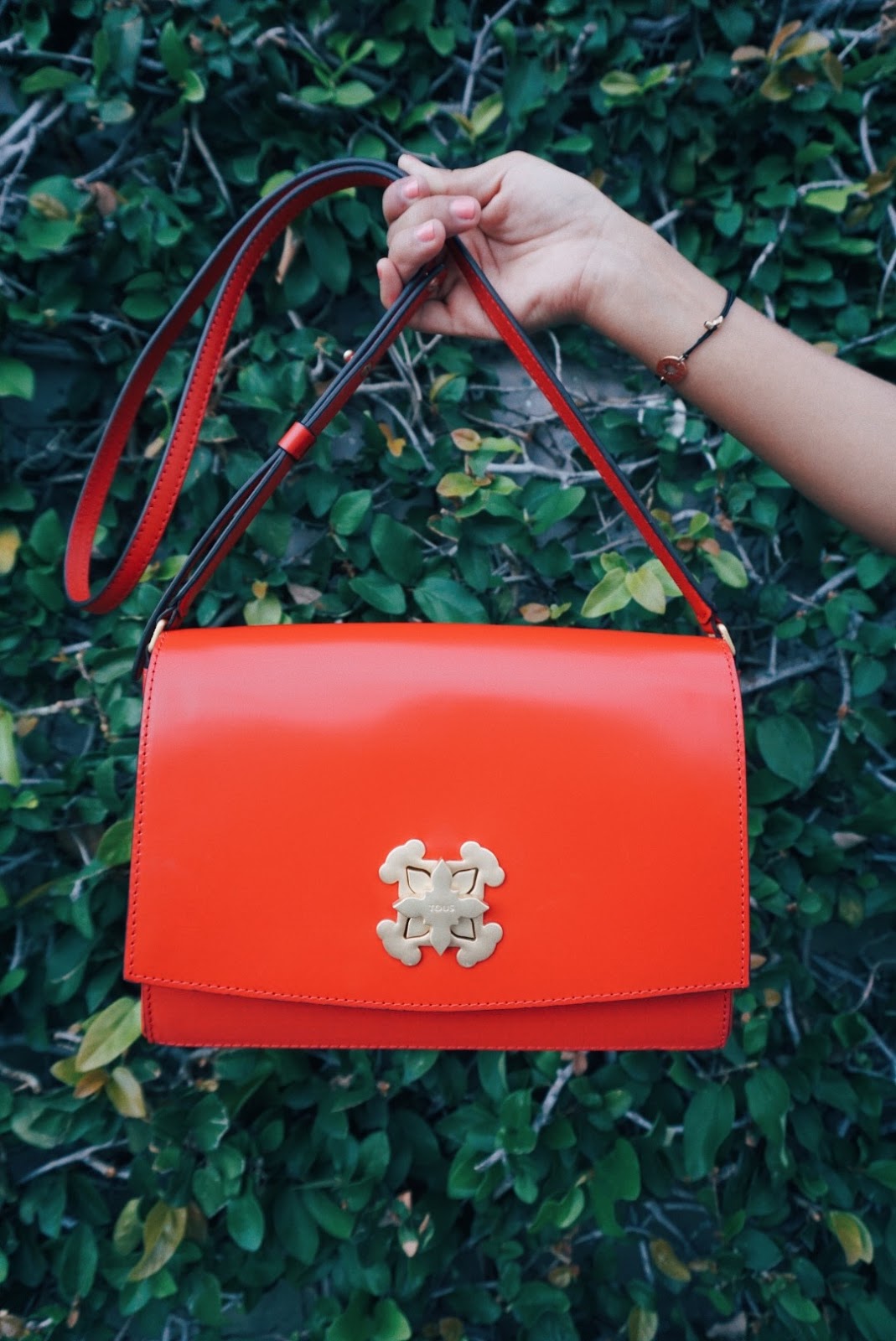
¡Hola! I wanted to try something a little different in this post and incorporate some of my medical knowledge within the usual styling post. As a health professional, I'm passionate about sharing my knowledge with others so as to offer a better understanding of disease processes and what we can do to prevent and/or treat them in ways that anyone can understand. Today I'm going to focus on a very important women's health issue, inspired by the red bag I'm wearing in this post:
Heart Disease
Now you may be thinking, "María, I'm 25-34 years old. I'm healthy and its going to be a long time before I have to think about these issues." Well, think again. Prevention is the best way to tackle these chronic and sometimes fatal diseases. The earlier we start working towards healthier goals, the better.
Let's start off with some basic facts:
- Cardiovascular diseases (CVD) are the leading causes of morbidity and mortality among women worldwide .
- This means that diseases that affect the heart are the leading causes of death and other related disease processes in women.
- Scientific research in the past decade has identified a set of risk factors for CVD that may be specific to women.
- There are some risk factors that research has found to be specific for women, therefore these are the risks we should be more mindful of and actively try to diminish.

Traditional risk factors can be categorized into 2 groups: non-modifiable and modifiable. Non-modifiable risk factors are, as the name suggests, factors that cannot be modified. The only risk factor specific to women in this category is:
- Age
- As women age and enter menopause they lose the cardio-protective effect of estrogen. Estrogen is a hormone which, besides playing an important role in our menstrual cycle, keeps our blood vessels dilated which in turn, keeps the blood flowing.

Although we can't stop aging, there are many modifiable risk factors that we can begin tackling from an early age:
- Smoking
- 13% of women 18 years or older are current smokers in the US.
- Women who smoke have a 25% greater risk of developing Coronary Artery Disease (when the blood vessels that feed our heart are damaged) than male smokers
- This means that although your boyfriend/husband also smokes, YOU have a 25% greater chance of developing heart disease than he does!
- What can YOU do: Ask your doctor for smoking cessation counseling. There are pharmacological options to help you quit smoking. If you don't smoke, avoid environmental tobacco smoke. Secondhand smoke is also dangerous to your health.

- Obesity
- 40.4% of the obese adults aged 20 years or older in the US are women.
- This means that women make up 40.4% of adults in the US with a BMI of over 30.
- What is BMI? BMI stands for Body Mass Index and it is a measure of body fat based on height and weight.
- Don't know your BMI? You can calculate it by using the formula: BMI= weight (kg)/ height (meters squared). Or you can just insert your details into a BMI calculator.
- What can YOU do: Women should maintain or lose weight through appropriate physical activity, caloric intake, and formal behavioral programs to achieve a BMI goal of <25kg/m2 or waist size <35"
- What is the recommended physical activity? At least 150 min/week of moderate exercise or 75min/week of vigorous exercise and muscle strengthening activities at least 2 days/week
- Talk to your doctor and/or a nutritionist about the appropriate caloric intake for you because this also depends on your daily activity.

- Hypertension
- Black and Hispanic women have significantly higher hypertension.
- Although antihypertensive agent trials do not report sex-specific analysis for efficacy or adverse effects profiles, a blood pressure target of <120/80 is generally recommended.
- What can YOU do: When you are at your doctor's visit, be aware of your blood pressure. If it is over 120/80 twice, talk to your doctor about possible lifestyle changes you can make to keep your blood pressure below that. If you have been diagnosed with hypertension and are talking medication, continue to do so as instructed by your doctor. If you are taking your medication as instructed but you have had home blood pressure readings of >120/80, talk to your doctor about possible changes to your medications.

- Dyslipidemia (abnormal amount of lipids [triglycerides, cholesterol] in your blood)
- 42% of women 20 years or older have a total cholesterol count of >200 mg/dl.
- 30% of women 20 years or older have an LDL count of >130 mg/dl and an HDL count of <40 mg/dl
- What does this all this mean? Both cholesterol and LDL are lipid molecules that can cause atherosclerosis, a disease in which blood vessels narrow due to the formation of a plaque.
- As blood vessels narrow, less blood can flow through them and this leads to areas of your heart/body that do not get the blood they need.
- HDL is the "good cholesterol" because it transports cholesterol to the liver where it can be removed by the body so we need more of this type and less of cholesterol and LDL.
- What can YOU do: The Center for Disease Control (CDC) reported that women were less likely to be prescribed statin therapy than men. Statin therapy is the appropriate treatment if LDL >190 mg/dl.
- Talk to your doctor about receiving this treatment or if lifestyle modifications are right for you if you notice your cholesterol/LDL levels are elevated in routine lab work.
- Diabetes Mellitus (DM)
- Although DM Type 1 affects women and men equally, women are at twice the risk of fatal and nonfatal vascular events compared to men with DM Type 1.
- Women are also less likely to have appropriate glycemic control and receive less aggressive treatment for many modifiable coronary artery disease risk factors than men.
We can't catch a break, can we?
- What can YOU do: If you suffer from DM Type 1, make sure to establish glycemic control by the proper lifestyle/diet modifications as indicated by your doctor/nutritionist. Also, keep an HbA1c goal of <7%.

Let's sum up the actions we as women can take to decrease our risk of developing cardiovascular disease:
- If you are a current smoker, talk to your doctor for smoking cessation counseling.
- Avoid environmental tobacco smoke (secondhand smoke).
- Have a BMI goal of <25km/m2. Achieve this by participating in at least:
- 150 min/week of moderate exercise or 75min/week of vigorous exercise
- Muscle strengthening activities at least 2 days/week
- Talk to your doctor and/or nutritionist about adequate caloric intake.
- Be aware of your blood pressure at each doctor's visit. You blood pressure goal should be <120/80. If your blood pressure is over this goal at 2 visits, talk to your doctor about possible further evaluation/lifestyle changes/treatment.
- If you have been diagnosed with hypertension, take your medication as instructed. If you are taking your medication as instructed but still have blood pressure readings of >120/80, talk to your doctor about further evaluation/changes in treatment.
- If you notice that your cholesterol levels are elevated in routine lab work (e.g. Cholesterol >200 mg/dl, LDL >190 mg/dl), talk to your doctor about lifestyle changes/treatment options.
- If you suffer from Diabetes Mellitus Type 1, have a goal HbA1c of <7%. If your HbA1c is higher than this, talk to your doctor about your diet and insulin regimen for possible changes.
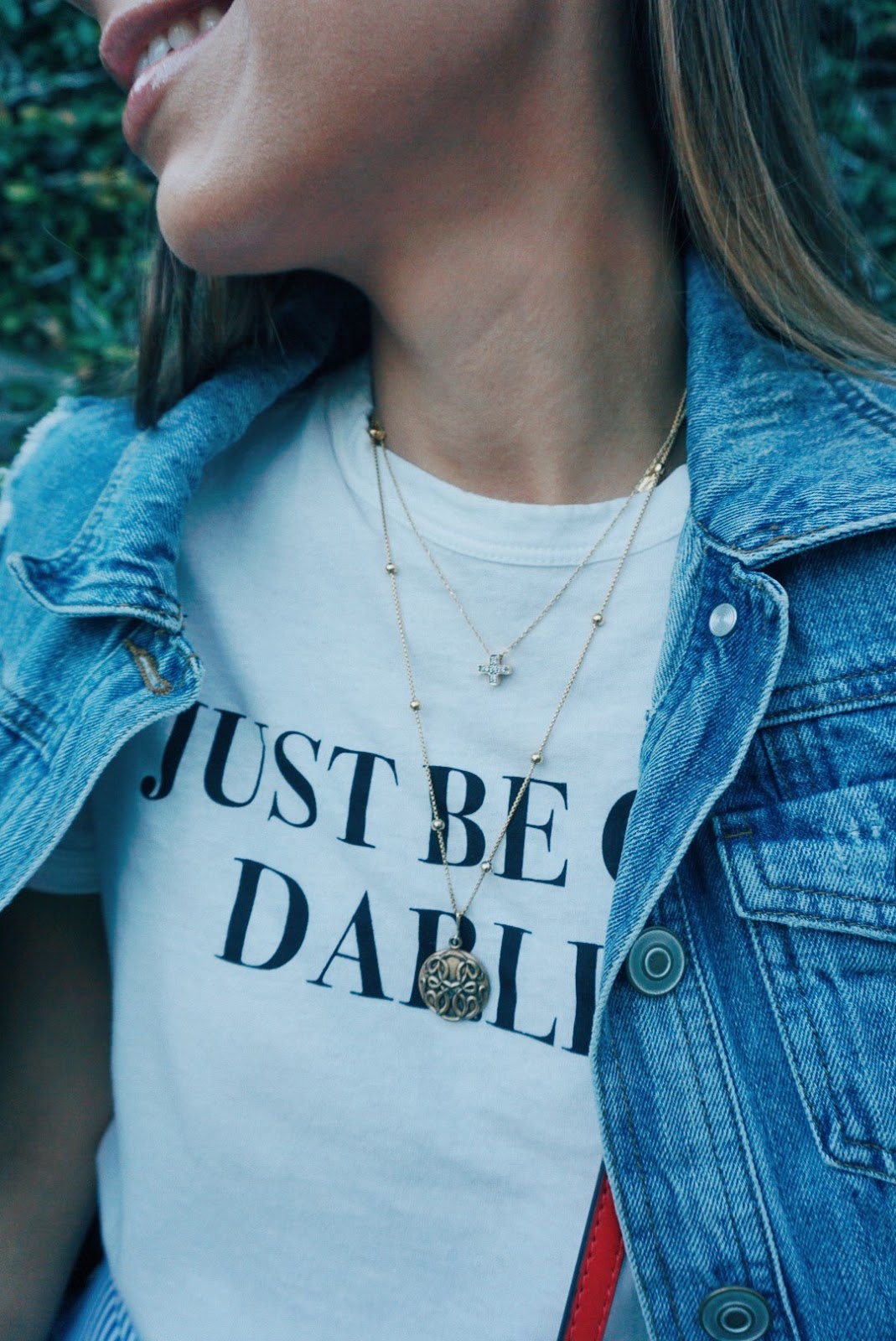
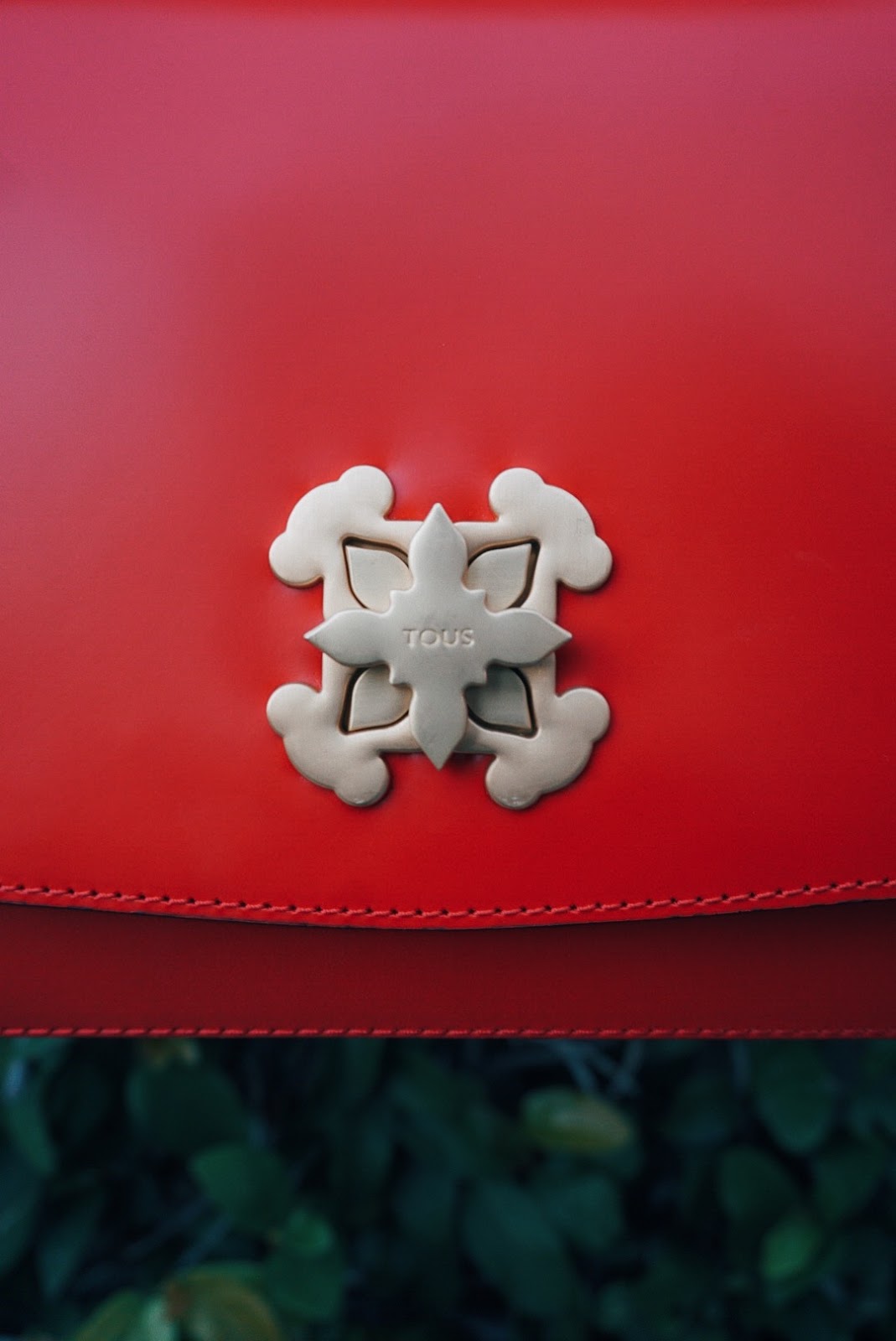
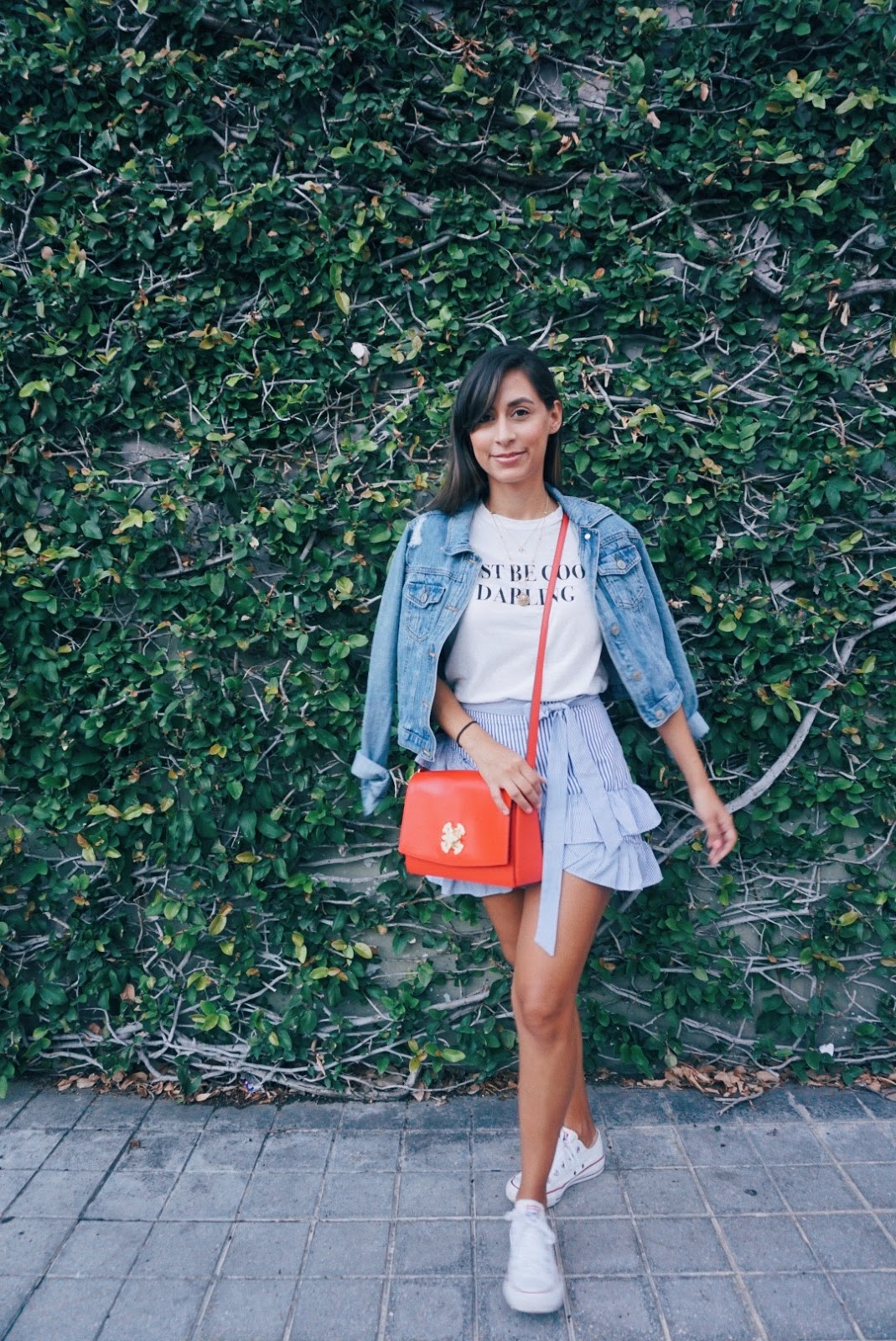
Top/Camisa: Zara (similar here, here, and here) Skirt/Falda: Forever 21 (limited sizes, check out this midi option and this plus size option) Jacket/Abrigo: Forever 21 Shoes/Zapatos: Converse Jewelry/Joyería: Alex and Ani Bag/Cartera: Tous (c/o)
As the beginning of my surgery residency approaches, more health posts will also be popping up here on the blog. I want to try to prepare posts that a medical student can learn something from but the general public will also understand. What did you think? Did any of these recommendations resonate with you? Would you like to see more posts like these or should I keep health and style posts separate? Let me know below!
Con amor,
María Eugenia
*On matters of health, although I am a doctor in medicine, I am NOT your primary physician. I will always recommend you seek out your primary physician if you have any health concerns for consultation and proper management as indicated by updated guidelines of care. None of my posts replace actual medical guidance. Read my full disclosure here.
SHOP THE LOOK!
The Health & Wellness: Tips & Apps for Keeping Your Wellness Resolutions
February 26, 2018

It's the end of February already! How are those New Year's Resolutions coming? Personally, so far so good! I've been managing to drink more water, keep up a fitness routine, and eat healthier. The one wellness goal I have yet to achieve is to meditate daily or weekly, or even at all! Below I'll share apps I've been using to keep track of my goals. Thank heavens we live in a modern world where our phones can help us do so!

I know you've probably heard the suggestion of drinking 6-8 glasses of water per day but that is an outdated recommendation. Your hydration status is personal and it depends on your gender, body mass index or BMI (a measure of body fat based on height and weight), and daily activity. For example, someone who works out daily and sweats should probably drink more water than your average couch potato just to replenish those losses. Calculate your hydration status here.
I think the best way to start tackling this goal is be getting a cute water bottle! You can find them anywhere, from Walmart, Walgreens to TJ Maxx, Mashalls, and online! Ban.do ones are very cool. My latest one is from Thermos and I love it because it has a dial that lets me track how may I've had during the day. When I'm at home, I prefer drinking water from an insulated cup with a straw. I don't know what it is about drinking water from a straw but it sure does make me meet my goal quicker! Here are apps that could also help you:
Plant Nanny (iOS, Android): My personal favorite app for tracking my water intake! After following a friend's recommendation, I was hooked! Each time you drink water and log it in the app, you water your plant. You keep watering your plant until it grows to its maximum and you get to plant a new one! Could it be anymore adorable?
My water balance (iOS, Android): You could say this is a more "refined" app than the one above. It includes a water requirement calculator and rewards for reaching your goal. I like that it takes various types of drinks into account for measuring your hydration.

Exercise has endless benefits! As women, exercising and maintaining an adequate BMI lowers our risk for cardiovascular disease, the leading cause of mortality in women worldwide! So yeah, I would say it is a big deal! What is the right amount of exercise? The recommended amount is 150 min/week of moderate activity (e.g. walking) or 75 min/week of vigorous activity (e.g. running, practicing a sport) with at least 2 days/week of muscle strengthening activities (e.g. weight lifting or body weight exercises).
I plan to prepare a more in depth post on exercise which should be up in the next couple of weeks. There I will include information on my routine and progress while using the Sweat app described below:
Sweat (iOS, Android): I began using this app and the BBG Stronger program 6 weeks ago. I am not going to sugar coat this: it is INTENSE. My interest for this program began after reading Rach Parcell's progress and following Kayla Itsines, founder, on Instagram where she shares other progress photos and inspiration. I was intrigued and began the program as a way to stay on track with my resolution to work out more this year. I was lucky enough to find a discount for $1 for 3 months of training. View the normal registration prices here.
I plan to prepare a more in depth post on exercise which should be up in the next couple of weeks. There I will include information on my routine and progress while using the Sweat app described below:
Sweat (iOS, Android): I began using this app and the BBG Stronger program 6 weeks ago. I am not going to sugar coat this: it is INTENSE. My interest for this program began after reading Rach Parcell's progress and following Kayla Itsines, founder, on Instagram where she shares other progress photos and inspiration. I was intrigued and began the program as a way to stay on track with my resolution to work out more this year. I was lucky enough to find a discount for $1 for 3 months of training. View the normal registration prices here.
Nike Fitness Club (iOS, Android): This is the app I would previously use to log my runs. It now also offers more than 160 free workouts and video guidance from trainers. You can prepare your own personalized workout and get daily workout recommendations.
Strava (iOS, Android): My husband swears by this app to track his cycling. He even uses it to track his runs. It compares your runs and let's you know if you've bettered/worsened your times. It also lets you know if others have run the same route and their timing.

To see my tips for a better night's sleep, check out the last Health & Wellness post on sleep. Although now I use my Fitbit to occasionally track my sleep (as will be discussed below), there is an app I have used in the past which I enjoyed:
Sleep Cycle Alarm Clock (iOS, Android): This app analyzes your sleep pattern. By doing this it wakes you up at your lightest sleep phase. It accomplishes this by analyzing vibration and sound. It can even track your snoring!

This is a new goal for me. Although meditation isn't something we are taught in depth about in medical school, I've done my own research and learned about its many benefits. Meditation can help reduce stress, improves concentration, increases self-awareness, and even benefits cardiovascular health! I've also been longing to be more present in life and more appreciative. For this, I've required the help of the following apps:
5 Minute Journal (iOS, Android): I purchased the actual 5 Minute Journal around a year ago. Although I love putting pen to paper and actually writing down the answers to the daily questions (I am grateful for, What would make today great?, Daily affirmation, etc.), while I was rotating I found myself to be rushing out the door or falling fast asleep from exhaustion before being able to do so. I decided to bite the bullet and purchase the app so that I could have my 5 minutes of reflection wherever I am during the day.
5 Minute Journal (iOS, Android): I purchased the actual 5 Minute Journal around a year ago. Although I love putting pen to paper and actually writing down the answers to the daily questions (I am grateful for, What would make today great?, Daily affirmation, etc.), while I was rotating I found myself to be rushing out the door or falling fast asleep from exhaustion before being able to do so. I decided to bite the bullet and purchase the app so that I could have my 5 minutes of reflection wherever I am during the day.
Calm (iOS, Android): As mentioned in my sleep post, I love this app for its bedtime stories. I have also used it for its guided meditations. Unfortunately the app has been updated so that most of its use needs a paid subscription which I am not yet lucky enough to have. I plan on taking advantage of the free aspects for the moment.
Headspace (iOS, Android): Although I prefer Calm, this app also offers guided meditation. You might of heard of this app if you heard the Ted Radio Hour podcast on slowing down (Interested on a post on my favorite podcasts? Let me know!) Check out both for your preference!

No healthy lifestyle changes would be complete without an adequate diet. Food gives you the energy to keep you moving and concentrated. I have been struggling with my tummy health for a long time now and have made specific changes to my diet which. I plan to write a whole other post on food and diet since it is a very extensive topic (and might even request the help a very food-smart friend!), so keep an eye out for that!
I find it extremely difficult to keep track of my meals for some reason. At this moment I am using a What I Ate notepad to keep track but in the past I have used the following app quite successfully!
Lifesum (iOS, Android): This app does everything: it counts your calories, provides meal options and recipes, and also tracks your water intake. I hate having to log in food so I enjoyed being able to scan in the barcodes of the products I consumed.
I find it extremely difficult to keep track of my meals for some reason. At this moment I am using a What I Ate notepad to keep track but in the past I have used the following app quite successfully!
Lifesum (iOS, Android): This app does everything: it counts your calories, provides meal options and recipes, and also tracks your water intake. I hate having to log in food so I enjoyed being able to scan in the barcodes of the products I consumed.

Fitbit (iOS, Android): I have already sung my praises for the Fitbit in the Valentine's Day Gift Guide for Him but that was simply not enough to express how much this gadget and accompanying app have changed my life.
I own the Fitbit Charge 2. This magnificent gadget reads my heart rate, tracks my steps, gives guided breathing sessions, tracks your sleep, and shows calls and text messages on its screen. The app has even more features: it tracks your all day activity, tracks your exercise (its amazing for HIIT programs that depend on your heart rate!), it tracks your sleep and reviews your trends, it can even vibrate to wake you as an alarm clock! The app can also track your weight, measure your hydration by logging your water intake, and you can use it to log your meals too!
You don't even need a Fitbit to use the app, it can track your steps and activity as the iPhone already does! Suffice to say it is, in my opinion, the best way to get your health on track for the remainder of the year!
I own the Fitbit Charge 2. This magnificent gadget reads my heart rate, tracks my steps, gives guided breathing sessions, tracks your sleep, and shows calls and text messages on its screen. The app has even more features: it tracks your all day activity, tracks your exercise (its amazing for HIIT programs that depend on your heart rate!), it tracks your sleep and reviews your trends, it can even vibrate to wake you as an alarm clock! The app can also track your weight, measure your hydration by logging your water intake, and you can use it to log your meals too!
You don't even need a Fitbit to use the app, it can track your steps and activity as the iPhone already does! Suffice to say it is, in my opinion, the best way to get your health on track for the remainder of the year!
What is your must-have app to stay on top of your health/fitness/wellness? Let me know below!
Con amor,
María Eugenia
The Health & Wellness: 8 Tips for a Better Night's Sleep
February 12, 2018

¡Hola! Health and wellness are very important subjects for me. I recently finished my medical degree and would love to share some of that knowledge with you guys in a way that is interesting yet simple. I have a few topics in mind but feel free to share any ideas with me in the comment section below!
------
¡Hola! Salud y bienestar son temas muy importantes para mi. Recientemente termine mi grado en medicina y me encantaría compartir algo de ese conocimiento con ustedes de una manera que sea interesante y simple. Tengo algunos temas en mente pero, ¡me encantaría saber cualquier idea de temas que tengan! |
| Image from DearLilyMae |
The first topic I plan to tackle is sleep. Sleep is seriously underrated. Accomplishing a restful night's sleep is imperative to being able to function on a daily basis. I suffered from years of nightmares and restless nights because I did not have adequate sleep hygiene. Over the last few years I've made sure to improve my habits and have significantly improved my sleep.
What is sleep hygiene? It's a variety of habits that are necessary for good sleep quality and daytime alertness. Let's discuss some of these habits:
------
El primer tema que vamos a atacar es el sueño. Lograr una noche de descanso es imperativo para funcionar en el día a día. Yo sufrí varios años de pesadillas y noches inquietas porque no tenia la higiene del sueño apropiado. Al pasar los años he logrado mejorar mis hábitos y mejor significativamente mi sueño.¿Qué es la higiene del sueño? Es una variedad de hábitos que son necesarios para tener buena cualidad de sueño y funcionamiento durante del día. Vamos a discutir algunos de estos hábitos:
1. Limit daytime naps to 30mins. Although some people fall asleep as soon as they close their eyes (my husband for example, how I envy him!), the average person takes about 15mins to fall asleep. This means that a scheduled 30min nap will give you roughly 15mins of rest. Enough time to ensure improved mood and alertness without affecting your nighttime sleep.
------
1. Limita las siestas a 30 minutos. Aunque existen personas que se quedan dormidos tan pronto cierran los ojos (mi esposo es uno y, ¡cuanto lo envidio!), la mayoría de las personas toman aproximadamente 15 minutos para quedar dormido/a. Esto significa que si tomas el tiempo para una siesta de 30 minutos, realmente descansaras unos 15 minutos. Esto es suficiente tiempo para asegurar mejor estado de animo y atención sin tener repercusiones en tu sueño nocturno. 2. Exercise regularly. I know that starting a workout schedule can make you feel more tired at the beginning, but if you keep it up, you'll find yourself with more energy throughout the day and having more restful sleeps at night. It is also important to make sure these workouts are at least 2-3 hours before bedtime. If you workout too close to bedtime, you'll find yourself still high on the energy and it'll be difficult to fall asleep.
------
2. Haz ejercicio con regularidad. Yo se que empezar una rutina de ejercicios puede hacerte sentir mas cansado al principio pero, si te mantienes fiel, con el tiempo vas a encontrar que tendrás mas energía durante el día y descansaras mejor en la noche. Es importante que te ejercites al menos 2-3 horas antes de dormir. Si te ejercitas muy cerca a la hora de dormir aun vas a tener la energía alta y lo encontraras difícil quedar dormido/a.
3. Avoid caffeine and alcohol. I personally have never consumed coffee and very rarely consume caffeinated beverages so this habit was a given for me but not so for most. Caffeine is a stimulant meaning that it keeps you awake. It is not only found in coffee. There's caffeine in chocolate, some teas, and some carbonated beverages. Although alcohol can make you feel drowsy, it first asks as a stimulant and will cause interrupted sleep meaning you won't have a restful night. When you go out for drinks, try sneaking in a glass/bottle of water between each drink to control your intake and keep you hydrated!
------
3. Evita la cafeína y el alcohol. Personalmente nunca he consumido cafe y rara la vez consume bebidas cafeinadas así que este habito se me hizo mas fácil adoptar como lo seria para otros. La cafeína es un estimulante, te mantiene despierto. No solo se encuentra en el cafe. Hay cafeína en el chocolate, algunos tes y algunas bebidas gaseadas. Aunque el alcohol puede hacer sentir soñoliento, primero actúa como estimulante y puede causarte un sueño interrumpido. Cuando salgas con tus amistades para un trago, trata de tomar un vaso/botella de agua entre cada bebida. ¡Así controlaras tu consumo y te mantendrás hidratado/a!4. Use your bedroom only as a bedroom. Do not watch TV or look at any screens as soon as you enter the room. Ideally, try to avoid having a TV or other technology in the bedroom to begin with. Try limiting your screen time to end at least an hour before bedtime. We sometimes even use the bed as a place to study or other. This confuses our minds. As soon as we enter the bedroom our brain should be automatically trained to think "it's time to sleep".
------
4. Usa tu dormitorio solo como dormitorio. Intenta no ver television o mirar cualquier tipo de pantalla tan pronto entres al dormitorio. Lo ideal seria evitar tener un televisor u otro tipo de tecnología en el dormitorio para empezar. Trata de limitar tu tiempo mirando pantallas a una hora antes de la hora de dormir. Aveces también usamos la cama para un lugar de estudio. Esto confunde nuestras mentes. Tan pronto entremos al dormitorio nuestro cerebro debería estar entrenado para pensar "es hora de dormir".5. Avoid heavy meals close to bedtime. Try to eat dinner before 7pm. If you find yourself late night studying and hungry, try a snack which won't cause indigestion (e.g. fruit, nuts, a green smoothie).
-----
5. Evita comidas muy fuertes cerca de la hora de dormir. Trata de consumir tu cena antes de las 7pm. Si te encuentras estudiando/trabajando hasta tarde con hambre, intenta una merienda que no cause indigestión (frutas, nueces, "smoothie" verde).6. Establish a routine. Set a fixed bedtime and time to wake up every day. Take a warm shower each night before bed. Have an easy read (book) nearby. Listen to a bedtime story. Yes, I'm 28 years old and love the occasional bedtime story! On nights that my husband is on call, I find it very hard to fall asleep. On such a night I came across the Calm app which has bedtime stories which you can leave running as you fall into a deep sleep. Although they've since required a paid subscription for all new stories, I continue listening to the free version and highly recommend them. Create a routine that works for you!
------
6. Establece una rutina. Establece una hora de dormir y hora de despertar fija cada día. Toma una ducha/baño con agua tibia. Ten un libro cerca de la cama. Escucha un cuento antes de dormir. Si, ¡tengo 28 años y me encanta escuchar un cuento antes de dormir! Las noches que mi esposo esta de guardia, se me hace difícil quedar dormida. Así encontré la aplicación de Calm el cual ofrece cuentos para antes de dormir que puedes dejar corriendo mientras vas quedando dormido/a. Aunque ahora requieren pagar para todos los cuentos nuevos, los cuentos que ofrecen gratuitamente son muy buenos y los recomiendo. ¡Crea una rutina que funciona para ti!7. Don't stay in bed for more than 20mins awake. If you find yourself in bed for more than 15-20mins battling with sleep, get up. Leave the bed room and walk around or sit down in the dark. Do not look at any screens during this time! Return to bed once your brain feels tired again.
------
7. No te quedes en la cama por mas de 20 minutos despierto/a. Si te encuentras en la cama por mas de 15-20 minutos buscando el sueño, levántate de la cama. Sal del dormitorio y camina por tu hogar o siéntate en la oscuridad esperando el sueño. ¡No mires ninguna pantalla electronica durante este tiempo! Regresa a la cama tan pronto te sientas cansado/a otra vez.8. Create a sleep-inducing environment. Start dimming the lights as soon as you enter the room. Turn on a light on your night table and turn off any ceiling/floor lights. This also helps in telling your brain "it's time to sleep". I personally also enjoy using aromatherapy. I have a Bath & Body Works wallflower with a lavender scent in the bedroom and use their Aromatherapy Sleep Lavender Vanilla Body Cream on my hands and décolletage after a warm shower and before bed. Check out more of their sleep aromatherapy line here.
------
8. Crea un ambiente que induce el sueño. Empieza a bajar las luces tan pronto entres al dormitorio. Prende la luz de tu mesa de noche y apaga cualquier luz de techo o piso. Esto le dice a tu cerebro que es hora de dormir. Personalmente, me gusta usar aromaterapia para crear un ambiente de sueño. Yo uso la crema de sueño de la linea de Aromaterapia de Bath & Body Works en mis manos y cuello antes de dormir. Puedes ver todo lo que ofrece la linea aquí.I would love to know if you start using any of these tips in your sleep routine and if they help you in any way! Let me know down below! Also let me know any other topics you wish to be discussed!
------
¡Me encantaría saber si empiezan a usar cualquiera de estos consejos en su rutina de sueño! ¡Déjeme saber en los comentarios! ¡También déjeme saber qué tema desean ver en el proximo post!
Con amor,
María Eugenia
Subscribe to:
Posts (Atom)


Social Icons